
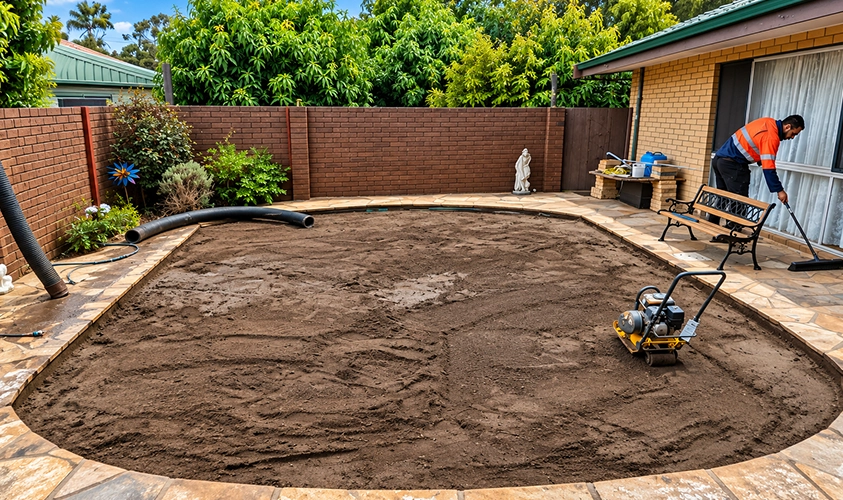
An unused swimming pool can take up a large part of the backyard long after a family stops using it. The next question is usually straightforward: Should the pool be filled in, or should it be completely removed? The main difference is what happens to the pool structure. A pool fill-in generally involves partial demolition, with some of the pool structure remaining underground before the area is backfilled. Complete pool removal involves taking out the pool structure before filling the excavation.
Those two approaches can differ in demolition work, hauling, cost, site preparation, and what homeowners may want to do with the area later. For Winnipeg homeowners, local requirements matter too. The pool type, backyard access, surrounding surfaces, drainage, and future plans should all be considered before choosing an approach. Carpenter Enterprises provides both pool fill-ins in Winnipeg, MB and swimming pool demolition services for homeowners who are ready to reclaim an unwanted pool area.
Pool Fill-In and Pool Removal Are Not Exactly the Same
The terminology around pool demolition can be confusing. Some contractors use pool removal as a general term for any project that takes a pool out of use. Others use it only for complete removal. That makes it useful to understand what is physically happening below the ground.
What Is a Pool Fill-In?
A pool fill-in usually involves partial removal of an inground swimming pool. Required portions of the existing pool are broken or removed, while some of the structure remains below grade. The remaining space is then filled according to the project requirements.
This is different from simply dumping soil into an intact pool.
Local demolition and inspection rules can determine what must happen to the shell before backfilling begins. In Winnipeg, the City’s demolition guidance describes a pre-backfill inground-pool inspection after the bottom has been broken and the side walls collapsed inward. The guidance states that this must allow for at least 24 inches of clean fill over the remaining material.
What Is Complete Pool Removal?
Complete pool removal goes further. Instead of leaving a portion of the shell underground, the pool structure is demolished and removed from the excavation. That can mean more demolition, more debris handling, additional hauling, and a larger amount of backfill work.
Homeowners considering complete removal should still think about what they plan to do with the property afterward. Removing the shell does not automatically answer every future construction, grading, or engineering question.
Pool Fill-In vs. Complete Pool Removal at a Glance
| Factor | Pool Fill-In / Partial Removal | Complete Pool Removal |
| Pool structure | Part may remain underground | Pool structure is removed |
| Demolition | Less structural material is usually removed | More extensive demolition |
| Debris hauling | Usually less | Usually more |
| Backfilling | Former pool area is filled | Entire resulting excavation is filled |
| Relative cost | Often lower | Often higher due to added work |
| Project complexity | Can involve fewer demolition steps | Usually involves more demolition and hauling |
| Future plans | Should be discussed before choosing | Future plans should still be considered |
| Local requirements | Permits and inspections may apply | Permits and inspections may apply |
Neither method should be selected only because one appears easier.
The right question is: What needs to happen to this specific pool so the property can support the homeowner’s next plan?
What Actually Happens During a Pool Fill-In?
A professional pool fill-in process starts with the existing conditions, not with the fill material.
Although individual projects differ, homeowners can expect several major considerations.
1. The Pool and Property Are Reviewed
The contractor needs to understand the pool size, construction, condition, and position within the backyard.
Access is equally important. A pool with open driveway access creates very different working conditions from one behind fencing, mature landscaping, a narrow side yard, or nearby structures.
2. Pool Water Must Be Addressed Properly
The pool needs to be drained before demolition work can proceed, but where that water goes matters.
The City of Winnipeg states that pool owners and service providers must follow the Sewer By-law. Pool water may be discharged to the home’s wastewater sewer or onto the property if it stays there until it evaporates or soaks into the ground. Discharge to a street, lane, ditch, or catch basin requires a Wastewater Discharge Licence. This is one reason pool removal should be planned instead of treated as basic backyard cleanup.
3. The Pool Is Prepared for Backfilling
The work required depends on the chosen removal method, pool construction, and local requirements.
For a Winnipeg inground-pool pre-backfill inspection, City guidance specifically describes the pool bottom being broken and side walls being collapsed inward before the remaining area is covered with clean fill.
4. Required Inspection Takes Place
Backfilling too early can create problems if an inspection must happen first. Homeowners should confirm current permit and inspection requirements for their specific property before work starts.
5. The Area Is Backfilled
Fill is placed into the former pool area based on the approved project approach. How the material is placed and the condition of the surrounding ground matter because the former pool area needs to become part of the rest of the property.
6. The Area Moves Toward Its New Use
Once the pool is addressed, the homeowner can move forward with plans for the reclaimed backyard space. That might mean lawn, landscaping, a garden, recreation space, or another future improvement.
For more preparation considerations, homeowners can also review what to know before removing an inground swimming pool.
What Changes With Complete Pool Removal?
The biggest difference is simple: more of the pool is taken out.
With complete inground pool removal, the shell and associated pool structure are removed rather than intentionally leaving portions below ground. This normally creates more demolition debris and hauling.
The process may include:
- Breaking apart the existing pool structure
- Removing demolished material from the site
- Addressing the larger open excavation
- Bringing in backfill material
- Filling and preparing the former pool area
- Completing required inspections and final site work
Because more material is demolished and removed, full removal commonly involves more labor, equipment use, hauling, and disposal than a partial fill-in. That is why complete removal often costs more. However, cost alone should not decide the method.
Which Factors Should Decide Between the Two?
Instead of asking which option is universally better, homeowners should ask which one fits the property and future plan.
Before choosing a pool fill-in or full pool removal, consider:
- What will the area be used for? Open lawn and future construction can raise different questions.
- Could a building or other structure be considered later? Discuss that before demolition begins.
- What type of pool is being removed? Concrete, fiberglass, vinyl-lined, and other pools can require different approaches.
- How will equipment reach the backyard? Gates, fences, trees, patios, and narrow access routes can affect the work.
- What surrounds the pool? Decking, landscaping, retaining features, walkways, and nearby structures may influence the project.
- How much material needs to leave the property? More demolition can mean more hauling.
- What permits and inspections apply? Municipal requirements should be confirmed before work begins.
A decision made around these questions is much more useful than choosing an option simply because its name sounds less involved.
Plan the New Backyard Before Removing the Old Pool
The best time to think about the next use of the yard is before the old pool is removed.
You do not need a complete landscaping design, but having a general goal can help guide important decisions.
The former pool space might eventually become:
- Open lawn
- A garden
- Recreation space
- A redesigned outdoor area
- New landscaping
- Space reserved for another future property project
Future plans become especially important if a homeowner expects to build over or near the former pool area.
Do not assume that a basic fill-in will automatically support every future construction idea. Likewise, complete removal alone does not replace any engineering, foundation, permit, or soil requirements that may apply to a future building project. Discuss the future use early so the pool removal decision does not conflict with the next stage of the property.
Frequently Asked Questions
1. Is Filling In a Pool the Same as Removing It?
No. A pool fill-in usually involves partial demolition, with some of the existing pool structure remaining below ground. Complete pool removal removes the pool structure before the excavation is backfilled.
2. What Stays Underground When an Inground Pool Is Filled In?
Part of the pool structure may remain underground with a partial fill-in. The exact amount depends on the project method and local requirements. Winnipeg’s demolition guidance includes specific conditions for the pre-backfill stage of an inground pool project.
3. Does Winnipeg Require an Inspection Before an Inground Pool Is Backfilled?
Yes, the City of Winnipeg’s demolition guidance identifies a pre-backfill inspection for inground pools. The inspection takes place at a specified stage before the pool remains are covered with clean fill.
4. Can You Build Over an Area Where a Swimming Pool Was Filled In?
Do not assume that every filled-in pool area is automatically suitable for future construction. What remains underground, soil conditions, compaction, the proposed structure, engineering needs, and local approvals may all affect what can be built. Discuss future construction plans before selecting a removal method.
5. Why Does Complete Pool Removal Usually Cost More Than a Fill-In?
Complete removal normally involves more demolition, debris removal, hauling, and backfill work. The pool’s size, material, location, access, and surrounding property conditions also affect the final project cost.
6. How Should Pool Water Be Drained Before Removal in Winnipeg?
Winnipeg allows pool water to be directed to the home’s wastewater sewer or onto the property if it stays there until it evaporates or soaks in. Some other discharge locations require a Wastewater Discharge Licence, while discharge onto neighboring property or into waterways is prohibited.
7. Should I Choose a Pool Fill-In If I Only Want More Backyard Space?
A pool fill-in may be an option when the main goal is reclaiming space from an unused pool. The decision should still account for the pool structure, property access, municipal requirements, and what you may want to do with the area later.
Reclaim Your Unused Pool Space
A pool fill-in vs. pool removal decision should start with the property, not with a one-size-fits-all recommendation. Consider what will remain underground, how the backyard can be accessed, local Winnipeg requirements, and how you want to use the area afterward.
Carpenter Enterprises LTD has been established in Winnipeg since 1986 and provides swimming pool demolition and pool fill-ins for homeowners ready to move beyond an unwanted pool.
To discuss the pool, backyard access, and your plans for the reclaimed space, contact Carpenter Enterprises or call (204) 799-6117.